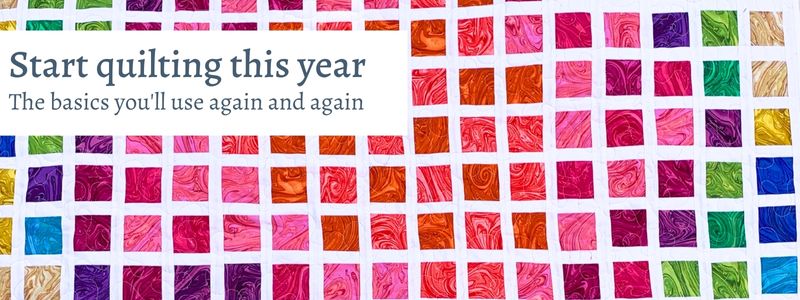

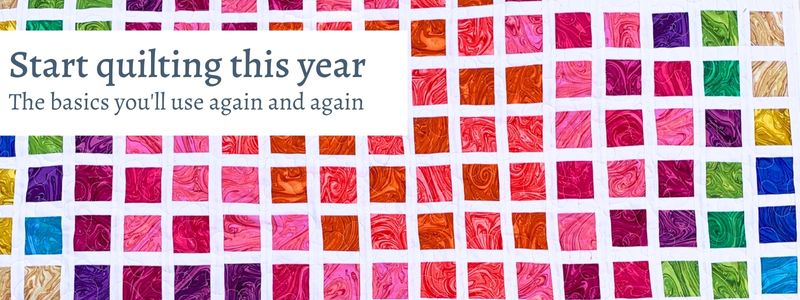
A new year is a great time to start quilting.
Quilting can look complicated, but the basics are straightforward.
With the right tools, a few good habits, and realistic expectations, you can get solid results from your very first project.
This post covers what to buy, what matters most, and tips that will save you time and frustration as a beginner.
Tools every beginner needs
You don’t need a fully stocked sewing room. Start with the basics and add tools as you gain confidence.
Sewing machine
A basic domestic sewing machine is enough to get started. You need:
- A straight stitch
- Adjustable stitch length
- The ability to sew a consistent ¼” seam allowance
That last point matters more than people realise. A consistent seam allowance is more important than it being a perfect ¼”. If all your seams are the same width, your blocks will fit together properly and your quilt will lie flat.
Rotary cutter
A 45 mm rotary cutter works for most quilting.
Keep the blade sharp. A blunt blade causes slipping, uneven cuts, and frustration.
Self-healing cutting mat
A self-healing cutting mat protects your table and your rotary cutter.
Good-quality mats help keep blades sharper for longer.
Cheap mats tend to dull blades quickly, which means more blade changes and less accurate cutting.
Choose the largest mat your space allows — bigger mats make cutting easier and more accurate.
Quilting rulers
Clear acrylic rulers with grid measuring are essential.
Start with two basic types:
- A rectangular ruler (around 6″ x 24″) for cutting strips and rectangles
- A square ruler (around 12″ x 12″) for squaring up blocks
The exact sizes aren’t critical. What matters is having one rectangular ruler and one square ruler to cover most beginner cutting tasks.
Fabric scissors and thread snips
Good fabric scissors are useful for trimming fabric, and small thread snips make quick work of cutting threads at the machine.
Thread
Use a good-quality cotton or cotton-blend thread.
Neutral colours work well for beginners because they blend into most fabrics and show less if stitches aren’t perfectly even. A mid to darker neutral is usually better than very light thread, which can stand out more on fabric.
Sewing machine needles
Use new needles and change them regularly.
A universal or quilting needle in size 80/12 is a good starting point for piecing.
Pins or clips
Pins help hold fabric pieces together accurately. Clips are useful for thicker seams or when sewing binding.
Seam ripper
Everyone makes mistakes. A seam ripper lets you undo stitches cleanly without damaging fabric.
If you’re new to using one, this short video shows how to unpick seams safely and neatly.
Iron and ironing board
Pressing is essential in quilting. Press seams after every step.
Always press rather than slide the iron. Sliding can stretch fabric and distort blocks, especially on bias edges.
Quilting basics every beginner should know
Accuracy matters more than speed
Slow down when cutting and sewing. Accurate cutting and consistent seams matter more than sewing quickly.
Fabric choice is key
Fabric selection has a big impact on how a quilt looks. High contrast makes block designs stand out. Low contrast can hide shapes.
This is a skill you learn over time. My fabric choices when I started quilting were very different from what I choose now. As you make more quilts, your eye for colour, contrast, and scale naturally improves.
Seams are part of the design
Seam direction affects how blocks fit together. Follow pressing instructions when provided and pay attention to how seams nest.
Square up blocks as you go
Square blocks during the process rather than waiting until the end.
The finished size doesn’t have to be perfect. Consistency matters more than hitting the exact size stated in a pattern.
If all your blocks are the same size, they will sew together cleanly, even if they are slightly smaller than planned.
Mistakes happen
Every quilter makes them.
Decide early what matters more to you: perfect points or a finished quilt. Both are valid.
Start simple
Choose blocks with straight seams and no complex trimming. Simple projects build skills and confidence.
Fabric notes for beginners
- Use quilting cotton — it’s stable and easy to work with
- Avoid stretchy or very lightweight fabrics when starting out
- Prewashing is optional, but mixing prewashed and unwashed fabric can lead to uneven shrinkage
- Buying fabric bundles is a good way to build a fabric stash — they’re colour coordinated and remove a lot of guesswork
- Scrappy quilts and coordinated quilts are both good choices for beginners
Final thoughts
Quilting is a skill you build one block at a time. Start with good tools, focus on consistency rather than perfection, and allow yourself room to learn.
Every quilt teaches you something. The most important step is simply getting started.
Looking for a project to start your quilting journey?
If you’d like a structured project to help you build skills, I’m running a Block of the Month in 2026 designed with beginners in mind.
The Boom Diddy Boom Block of the Month features:
- 12 large blocks, released one per month
- 12″ x 12″ finished blocks
- Straightforward construction with no unnecessary complexity
- Clear video tutorials for every block
- A finished sampler quilt measuring 54″ x 68″
The blocks are classic, the scale is forgiving, and the pace is manageable — ideal if you’re new to quilting or want to improve your accuracy and confidence over time.
You can find all the details and join through my Patreon.

 teresadownunder.com